Think about the last time you have purchased a product or service. Think about the time you discovered about its price and how you came to a quick conclusion of deciding whether it is worth the value for your money or not. That is exactly how your customers will think because each and every one of us is a victim of consumerism. This should help you grasp the concept on how and why people fork out their money for your product and service.
A lot of factors comes in and contribute to the final decision.
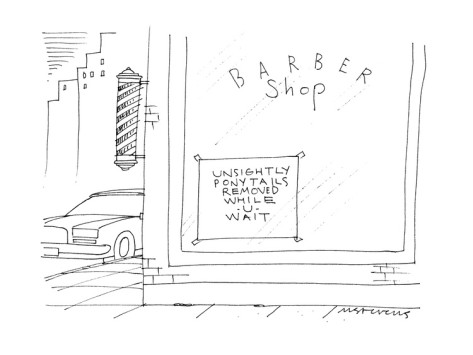
Let’s break down on the process of customers thought before and after a purchase of a product and service. A problem presents itself to me and I had to search for information regarding it. I, then, evaluated the alternatives online and went out to make a purchase. Lastly, I assess the service provided after I have purchased it.
Stripping it to major components only will look like this:
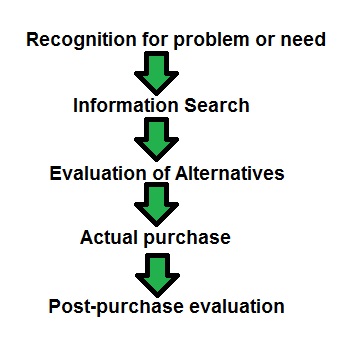
This flow chart is important to understand the thought process going through a potential consumer’s mind. However, there are many factors to consider that can potentially change the decision that he or she would come to. Referring to my story above, even though the first hairdresser had a lower price, I had to settle for the more expensive option due to time constraint. However, I wasn’t happy with the haircut I got. Thus, customer satisfaction is brought in and 'happiness' is a very difficult element to measure. On the other hand, for a tangible product, post purchase evaluation covers areas like the disposal of your product (is it environmental friendly or easy to dispose?), services provided after purchase (warranty, customer service) and the value customers get for utilizing the product.
There’s a lot that goes through a customer’s mind before a purchase it made especially with irrational behaviour and the introduction of online purchasing. Online stores have to look into their system quality, auction price and other services supporting the product. Applying the 7Ps of marketing would help a lot by organising the way your product or service define themselves in the marketplace.
In a nutshell, we can theorise what customers think and do in a nicely organised flow chart but we can never be 100% sure.

Ever heard of the story of the rice crop? The older and riper it gets, the more it bends downwards. Living by this principle I believe that life is a never-ending learning process and the more I learn the more I'm humbled by it. Keeping my nose low and helping others are my priorities. I'm no successful entrepreneur nor an excellent sportsman. However, I do aspire to reach for the stars and when I do; it is of utmost importance to be grateful to everyone around me.
Do you need help with
customer retention?
There are 777 business consultants on standby